
Preventing choking deaths among people with learning disabilitiesChoking remains one of the most significant and preventable risks facing people who receive care and support. While incidents can have devastating consequences, national learning consistently shows that effective prevention is possible when risks are recognised early, staff are well trained, and organisations embed safe practice into everyday care. Our latest white paper explores what good choking prevention looks like across social care, supported living, and community settings. Drawing on national learning, regulatory expectations, and best practice guidance, it provides practical recommendations for providers, commissioners, managers, and frontline teams responsible for supporting people to eat and drink safely. Importantly, the paper recognises that mealtimes are about far more than nutrition. Eating and drinking are central to dignity, independence, culture, identity, and quality of life. The guidance demonstrates how care providers can balance safety with choice, ensuring people continue to enjoy positive dining experiences without unnecessary restrictions. Whether you are reviewing existing processes, strengthening staff knowledge, or seeking to improve oversight and governance, this white paper offers valuable insights into creating safer, more responsive services. Download the white paper and accompanying resources to discover how proactive risk management, collaborative working, and a culture of continuous learning can help prevent harm while supporting people to live fulfilling lives. |
|
|
|  |
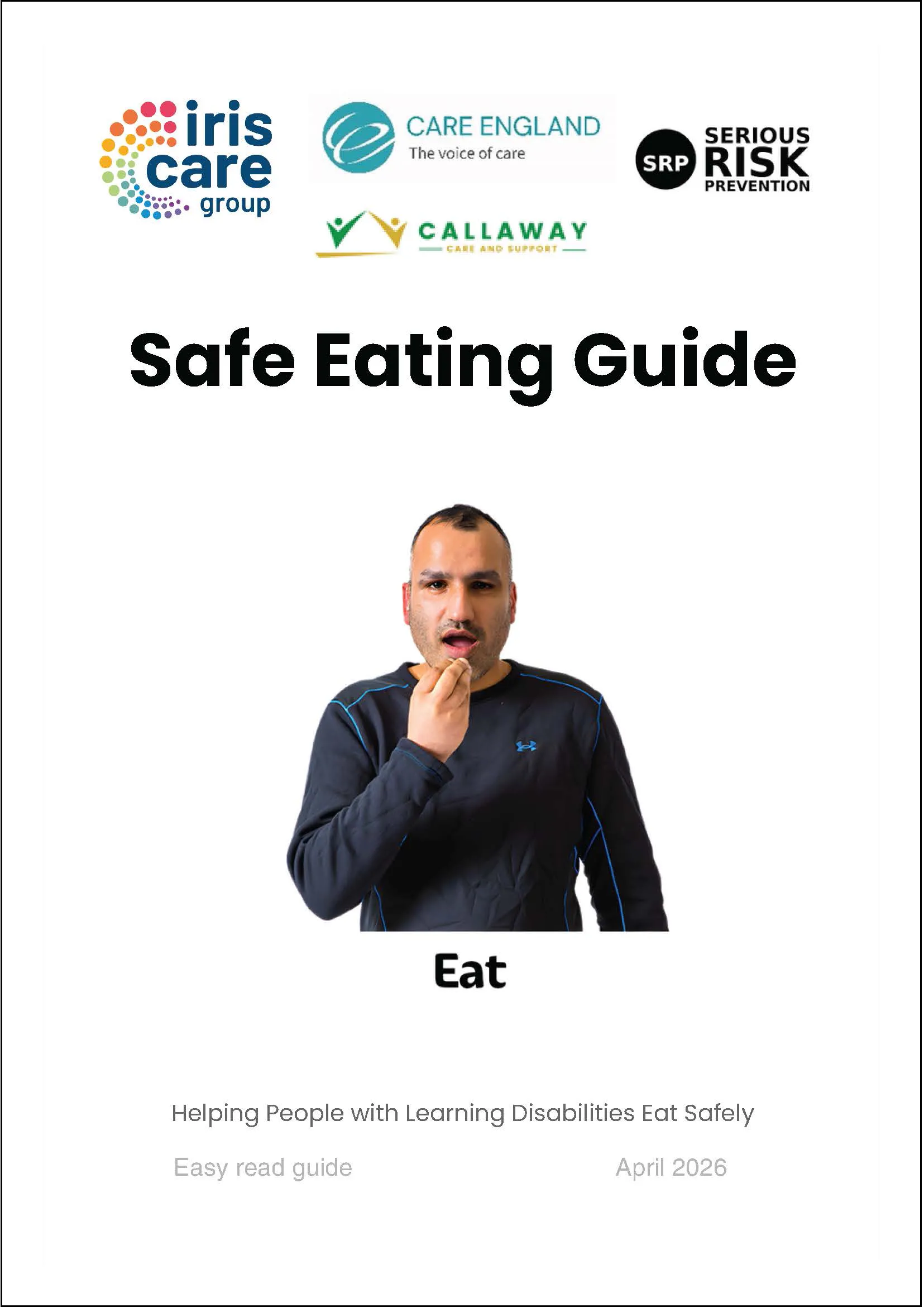
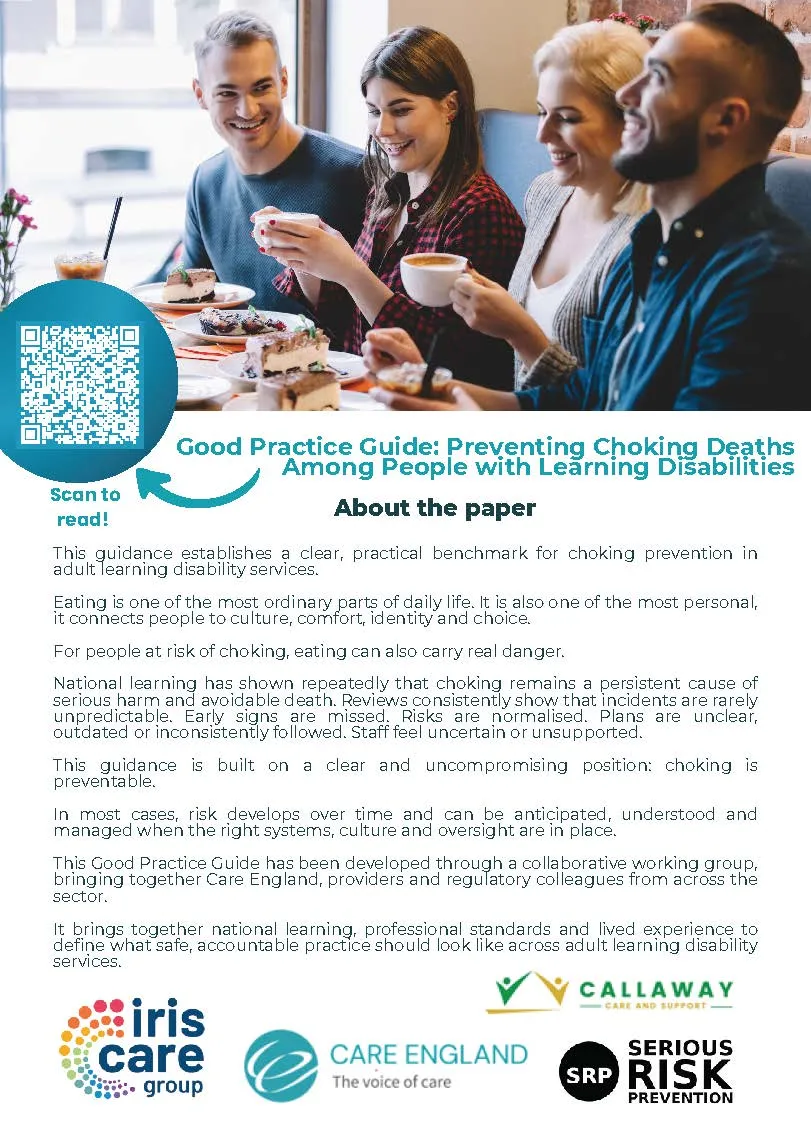
| Download the white paper here | Download the Safe Eating Guide here | Download the Flyer here | Access the Preventing Choking Toolkit here |
| Download | Download | Download | Download |

DisclaimerThis guidance and the accompanying resources are intended to support good practice in reducing choking risk and improving safety for people with learning disabilities. They are designed as practical tools to support providers, practitioners and system partners, but they do not replace professional clinical judgement, individual risk assessment, multidisciplinary decision making, or specialist advice. Providers and practitioners remain responsible for ensuring that care and support are tailored to the needs, wishes and legal rights of each individual, and are delivered in line with current legislation, regulatory requirements, national frameworks and local policies. |